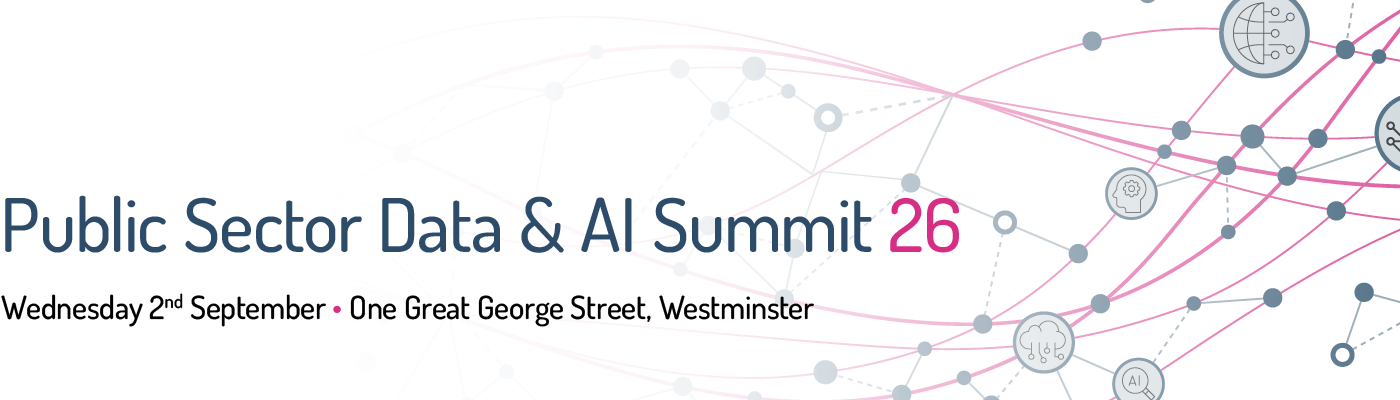
Delegates can expect a full day of forward‑looking discussion and presentations:
Plenary presentations
- Chair’s Welcome – Clive Kelman
- Connected Government, Trusted AI: Why Public Sector AI Depends on Trusted Context – Errol Rodericks
As governments accelerate AI adoption to improve services, enhance public safety, strengthen safeguarding, and increase productivity, a critical challenge is emerging: AI can only act on the information it can access. To deliver effective and responsible AI, organisations need trusted, governed, and connected information across departments, agencies, partners, and operational systems. In this session, attendees will explore:
– Why trusted context is essential for successful Public Sector AI
– How leading organisations are overcoming information silos
– Approaches to enabling secure, trusted information sharing across organisational boundaries
– The foundations required to support Agentic AI at scale
– How to maintain transparency, accountability, and public trust.
The session provides practical insights for organisations looking to move beyond AI experimentation and deliver connected, outcome-driven public sector transformation. - A regulator’s perspective on AI in a critical national infrastructure sector – Declan Stock
From a regulator’s perspective, this session explores how AI is reshaping risk, governance, and assurance in CNI. It examines challenges and practical lessons for policymakers overseeing AI deployment in complex, safety critical environments. - The Oversight Paradox: Cutting Through Administrative Noise to Restore NHS Purpose – Dotun Oluyade
The relentless pursuit of clinical data has created a striking paradox: sprawling assurance frameworks and hyper-reporting now blunt strategic decisions instead of sharpening them. This session explores how to cut through this administrative noise, systematically dismantle bureaucratic waste, reduce professional burnout, and restructure NHS governance to shift from doing more with less to doing more with precision. - When systems accelerate: AI, fiscal stress, and the future role of local government – Jens Gemmel
This presentation examines how global economic system shifts, rising fiscal pressures, and rapid advances in artificial intelligence are converging to reshape the environment in which councils operate. The presentation connects big-picture forces to their local consequences, showing how changes in technology, social progress, and institutional capacity are driving new patterns of demand and risk. It explores why local government sits at the centre of societal stability during periods of disruption and sets out a clear, practical framework for building resilience through prevention-first thinking, AI-native institutions, and place-based innovation. The presentation offers strategic insight for senior leaders seeking to understand what comes next and how local government can shape the future rather than simply respond to it.
Session presentations
- Make Agentic AI Real: From Experimentation to Production – Timea Ivacson & Richard Beet
Agentic AI is moving quickly from experimentation into real-world deployment, but the real challenge is turning early promise into scalable, trusted, and production-ready solutions. This session brings together two complementary perspectives: a business view of the strategic relevance and emerging use cases for agentic AI, and a technology view of what it takes to design, integrate, govern, and scale these systems in practice. The result is a grounded view of how organisations can make agentic AI real – and move from pilots to robust, responsible production deployment. - No surprises on moving day: Governing data migration at scale – Henry Newman-Burke & Maja Strawinska
Moving house takes time, planning and careful decision-making, especially when you are upgrading to something smarter and can’t afford disruption. Using the familiar analogy of a house move, Henry Newman-Burke explores the key factors and considerations involved in managing data migration successfully across large-scale public sector projects. From deciding what to pack, what to leave behind and how to label the boxes, to preparing the foundations for emerging technologies like AI in your new home, this session highlights how strong governance ensures your data is not just moved safely, but ready to power the next generation of digital services.
- AI for Cutting Red Tape: What It Can (and Can’t) Do in Rule Simplification – Mark Girshgorn & Prof. Dr. Florian Möslein
Overlaps, contradictions and inconsistencies in rules drive administrative burden and legal uncertainty. Based on a feasibility study commissioned by Germany’s Federal Ministry of Finance, this talk explores how AI can help identify rule-simplification opportunities—reliably and in an auditable way. It highlights the key prerequisites for trustworthy outputs: a quality-assured legal knowledge base, a multi-method AI approach, and expert validation, and clarifies where human judgement remains essential. - Space for Improvement: Satellite data‑driven solutions to public sector challenges – Donna Lyndsay, Ehsan Khalefa, Nina Moiseeva & Eleanor Thomson
This session explores how satellite Earth Observation data is already supporting practical problem‑solving across the UK public sector. Chaired by Space4Climate, it brings together real‑world examples, lessons learned and trusted routes for further engagement. - Safeguarding confidentiality and managing legal risks in public sector use of generative AI – Paul Knight
This session will explore how public sector organisations can safely use generative AI tools while maintaining statutory confidentiality obligations, especially regarding intellectual property and sensitive government information. The talk will cover due diligence steps for selecting and implementing generative AI products, practical safeguards to prevent disclosure of secrets and examples of legal issues such as IP infringement, confidentiality breaches, and liability for incorrect outputs. The session will also address current government policy positions on AI use and provide guidance on navigating evolving requirements. - Human in the Loop: Placing People at the Heart of Digital Transformation – Yusra Ahmad
AI provides immense opportunity to transform the public sector as a whole, particularly healthcare, where it offers faster diagnosis, better outcomes and smarter systems. But how do we unlock these outcomes sustainably? And what does it take to turn AI’s promise into safe, lasting, adopted practice? Join this session to explore the answers and why the people around the technology, not the technology alone, may hold the key. - Connecting Innovators to Data, Safely: ONS Case Study on Knowledge Graph Enabled AI Discovery – Adam Milward
Every AI ambition in the public sector depends on one thing: an innovator being able to find the right data, trust it, and be allowed to use it — safely. Adam Milward, CEO of MetadataWorks, shares how his team partnered with the Office for National Statistics to deliver safe, accountable data access, and introduces Memir — an AI-enabled discovery capability built on a superfast knowledge graph that turns the Five Safes into a living, queryable fabric. The mission is simple: connecting innovators to data, safely — and accelerating AI on foundations you can trust.
Agenda may be subject to change and will be updated regularly
Plenary & keynote speakers

Clive Kelman
Conference Chair
Former UK Government’s AI Principal Technologist, based at the Cabinet Office
Clive Kelman is now Group Lead for Advanced Data and AI at BAE Systems, where he supports the strategic adoption, governance and scaling of AI across the global organisation.
Previously, Clive served as the first Principal AI Technologist working across the UK Government, helping departments and public bodies adopt AI responsibly and effectively. He co-authored the UK Government’s Generative AI Framework and AI Playbook and chaired the Government AI Technical Advisory Panel, bringing together experts from government, industry, standards bodies and academia.
Clive has more than 20 years’ experience leading AI, data and digital transformation across government, defence, regulated industries, healthcare and major infrastructure. His previous leadership roles have included work with the Houses of Parliament, BT, Elexon (National Grid), Ofgem and Jacobs.
His particular focus is turning AI ambition into dependable organisational capability—combining trusted data, effective governance, technical assurance and measurable operational value.

Errol Rodericks
Product & Solutions Marketing Director, Denodo
Errol Rodericks is an experienced Product Marketing and go-to-market leader with over 20 years of experience in enterprise software, SaaS, AI, and data platforms. At Denodo, Errol heads global vertical and solutions marketing, while supporting regional product marketing across EMEA and LATAM. His focus is on building compelling narratives for GenAI and Logical Data Management, enabling sales and partners to deliver measurable outcomes across industries such as Financial Services, Legal, Life Sciences, Public Sector, Manufacturing, and Retail. He has held senior leadership roles at Boomi, ServiceNow, HP, CA Technologies, IBM, and Mercury Interactive, consistently translating complex technologies into business value and scaling global campaigns to drive growth.
With an MSc in Digital Systems from the University of Wales and a BSc (Hons) in Electronics & Communications Engineering from the University of North London, Errol combines deep technical knowledge with business acumen. He is a frequent speaker and thought leader on the role of GenAI, Data Management, and data-driven transformation in accelerating digital outcomes.

Declan Stock
Principal Technical AI Lead, Emerging Technologies Team, Ofgem
Declan is Principal Technical AI Lead at Ofgem, Britain’s energy regulator. He leads technical work on AI, quantum, and frontier digital technologies, enabling safe, secure, fair, and environmentally sustainable outcomes for energy consumers. He brings practitioner experience delivering complex data and AI solutions across energy, engineering, finance, and defence.

Dotun Oluyade
Head of Application & Development, Bradford Teaching Hospitals NHS Foundation Trust
Dotun is a governance-first digital transformation leader with over two decades experience in public sector. He currently serves as the Head of Application & Development at Bradford Teaching Hospitals NHS Foundation Trust (BTHFT) within the DDAT directorate. Dotun leads the management and governance of the Trust’s application portfolio, driving clinical interoperability, establishing testing standards, and steering bespoke, clinically safe AI-driven solutions. He combines deep sector insight to help public sector organisations shift from doing more with less to doing more with precision

Jens Gemmel
Public Sector Reform & Innovation
From entrepreneur to e-government advisor and local government reform, Jens Gemmel von Döllinger brings his ideas and innovation to drive systemic change through innovative public service delivery models and the application of AI and data analytics.
Working in Public Service Reform for over two decades as a Systems Thinking Practitioner and author of two books, “Living Council: A Manifesto for Practice” and “The Anatomy of the Local State: Systems thinking for the AI-native, prevention-first council”, Jens has led on some of the most impactful public sector transformations in the UK and helped reshape the priorities of over a dozen local authorities, cities and their partners.
Jens was Highly Commended for two IoD National Director of the Year Awards 2023, in the categories “Public & Third Sector” and for “Sustainability”, and awarded Finalist twice by the IoD in 2025, for “Innovation” and “Turnaround”, recognising his groundbreaking work on public sector reform and prevention-first models for local government.
Session speakers

Yusra Ahmad
Founder & Managing Director, Acuity Data
Yusra Ahmad, founder of Acuity Data & Taleem, is a data and AI strategist. She has spent 18 years helping organisations across the UK, GCC and beyond navigate digital transformation, and more recently, adopt AI responsibly. She previously chaired the RED Foundation’s UK Data Ethics Committee and now chairs its GCC Chapter, leading regional AI ethics and governance initiatives. A published researcher for the Global Index for Responsible AI (GIRAI), she led the UAE’s national submission, assessing the UAE’s National AI Strategy. She also writes Human in the Loop, a Substack on the future of the workforce in the age of AI, and advises governments, enterprises and academic institutions on AI governance, strategy and practical adoption.

Richard Beet
Senior Director | Head of UK Public Sector | Insights & Data GBL, Capgemini
Richard Beet is a Senior Director at Capgemini where he operates as the Head of UK Public Sector for Insights & Data. In his role, Richard focuses on bringing data-powered innovation to UK Government and Defence through AI, data science, engineering, and content services.
With extensive experience across UK Defence and Intelligence, Richard oversees Capgemini’s data and intelligence programmes across the Ministry of Defence, including the Defence AI Centre, Defence Intelligence, Defensive Cyber Operations, NAD CDO, Defence Digital, the RAF, Royal Navy, Army, and DE&S.
Working at the intersection of strategic advisory and technical delivery, Richard helps organisations establish the trusted data foundations needed to scale AI and automation effectively. Drawing on experience across public sector, defence, nuclear, healthcare, financial services, energy, travel and transport, and logistics, he brings a broad perspective on how strategic data and AI can improve performance across complex organisations.

Marc Girshgorn
Senior Manager, d-fine
Marc Girshgorn is a Senior Manager at d-fine with 10+ years of experience helping public-sector and financial-services organisations across Europe deliver digital transformation and adopt AI responsibly. He advises ministries, agencies and public bodies on building modern data foundations and governance to improve service delivery, enable evidence-based policymaking, and strengthen transparency and risk management. Marc holds a Master’s degree in Financial Mathematics from École Polytechnique.
At Public Sector Data & AI Summit, Marc presents findings from a study on how AI can support administrative burden reduction—an initiative he co-led and which was commissioned by the German Federal Ministry of Finance.

Timea Ivacson
AI & Agentic AI Lead, Capgemini
Timea Ivacson is an AI & Agentic AI Lead at Capgemini, specialising in the design and delivery of advanced AI systems that move beyond experimentation into real-world deployment. With an academic background spanning economics, psychology and mathematical sciences, she brings a multidisciplinary perspective to building AI solutions that are technically robust, scalable, and grounded in real organisational needs.
Her experience spans public sector, financial services, water, biopharma, telecommunications, chemicals and energy, giving her a broad perspective on how AI can be applied in complex and regulated environments. Alongside designing, building and leading AI solutions, she also leads technical AI upskilling initiatives, helping organisations build confidence in adopting AI responsibly and effectively.

Dr. Ehsan Khalefa
Research Fellow, School of Environment and Life Sciences, Portsmouth University
Ehsan Khalefa is a Research Fellow at the School of the Environment & Life Sciences, specialising in remote sensing with a focus on environmental applications. Her research involves using satellite imagery and geospatial data to study critical environmental issues, including climate change, land use/land cover, and water availability. Eshan also works on projects that utilise satellite data for crisis response, helping to monitor and manage environmental disasters, while providing valuable insights for policymaking and resource management.

Paul Knight
Partner, Mills & Reeve
Paul is a partner at Mills & Reeve specialising in technology and commercial law. He advises organisations, including Government departments, executive agencies and non-departmental public bodies, on the application of existing laws to innovative technologies, such as Generative AI and the legal risks to manage.

Donna Lyndsay
Interim Climate Services Development Manager, Space4Climate
Donna is a seasoned strategist and spatial data specialist with over 35 years of experience in the geospatial, Earth Observation, and environmental sectors, Donna has been at the forefront of delivering innovative solutions, products, and communication strategies to corporations for many years. Currently supporting Space4Climate, with a strong focus on translating climate science into practical, decision ready services. She works closely with stakeholders to develop climate tools and services that support resilience, adaptation, and evidence based planning across sectors. Donna is particularly passionate about bridging the gap between data, policy, and real world impact.

Adam Milward
CEO, Metadataworks
Adam is the CEO and Co-Founder of MetadataWorks. He led the data architecture team for the groundbreaking 100,000 Genome Project and has been instrumental in delivering the UK’s National Adult Social Care Record Standard, as well as serving as a member of the British Standards Institute’s IST/35 Health Informatics board and the UK FHIR sub-group for social care.
Adam is deeply committed to FAIR data and is at the forefront of building federated data discovery networks across the government. He is delivering integrated metadata catalogues for leading organisations, including NHS England, Administrative Data Research UK, the Intergovernmental Panel on Climate Change, and the UK Office for National Statistics.

Nina Moiseeva
Chief Scientific Officer, Map Impact
Nina is Chief Scientific Officer at Map Impact, specialising in turning Earth Observation and geospatial data into practical environmental intelligence. She architects the scientific foundations of climate and nature products, helping public and private sector organisations understand environmental change, assess risk, and make evidence-based decisions. Her work includes applying satellite data to climate resilience, Biodiversity Net Gain and Local Nature Recovery Strategies. Her career spans industry and academia. Nina was named among the Top 100 UK Geospatial Professionals (2025) and is currently pursuing a PhD in wildfire forecasting.

Dr. Florian Möslein
Professor of Innovation and Law, University of Vienna
Florian Möslein has served as Professor of German Civil Law, German and European Business Law at Philipps-University Marburg since 2013, following positions at the University of Bremen and earlier roles at Humboldt-Universität zu Berlin and the University of Erlangen-Nürnberg.
Since 2018/19 he has been Founding Director of both the Institute for the Law of Digitalisation (IRDi) at Marburg and the Hessian Centre Digital Responsibility (https://zevedi.de/en/). His research covers corporate and capital markets law, banking law, contract law, European law, legal theory, and comparative law; he co-edits the journals Recht Digital (RDi), Juristenzeitung (JZ) and Juristische Ausbildung (JURA). Notable visiting positions include UC Berkeley, Stanford, NYU, and the European University Institute.

Henry Newman-Burke
Principal Consultant, Butterfly Data
Henry Newman-Burke has over 30 years of IT experience, including six years at Butterfly Data, blending hands-on technical expertise with leadership in cloud architecture, platform modernisation and IT operations. A 13-year SAS practitioner, he designs secure, scalable solutions across Azure, AWS and SaaS platforms. Based in Yorkshire, he is also a church organist and passionate ornithologist.

Maja Strawinska
Data Science Consultant, Butterfly Data

Eleanor Thomson
Lead Technologist, Gentian
Dr Eleanor Thomson is Lead Technologist at Gentian, where she combines her expertise in ecology and remote sensing to develop solutions for mapping and monitoring biodiversity. During her academic career, she spent 10 years using drones to study tropical forests, investigating questions from global variation in photosynthesis to the effects of invasive rats on nutrient cycling in island ecosystems. At Gentian, she works across the product, technology, and commercial teams to tailor habitat mapping outputs to address needs spanning climate resilience, environmental compliance, and nature-related risk.
event timetable
09:00 Registration & networking
10:00 Morning Plenary
11:15 Refreshments & networking
11:55 Make Agentic AI Real: From Experimentation to Production
12:20 No surprises on moving day: Governing data migration at scale
12:45 AI for Cutting Red Tape: What It Can (and Can’t) Do in Rule Simplification
13:10 Lunch & networking
14:00 Space for Improvement: Satellite data‑driven solutions to public sector challenges
14:25 Safeguarding confidentiality and managing legal risks in public sector use of generative AI
14:50 Human in the Loop: Placing People at the Heart of Digital Transformation
15:15 Refreshments & networking
15:40 Connecting Innovators to Data, Safely: ONS Case Study on Knowledge Graph Enabled AI Discovery
16:05 Chair’s closing remarks
16:15 Conference Close
Please note speakers, subject matter and timings may be subject to change
SPONSORS, EXHIBITORS & SPEAKERS FROM











VENUE LOCATION

This event takes place at
One Great George Street
Westminster
London
SW1P 3AA
One Great George Street is close to a number of underground and overground stations, and is just a stone’s throw away from the Houses of Parliament, Westminster Abbey, Buckingham Palace and St James’s Park.
Venue website: Click to visit
CONTACT US
Delegate enquiries (including bookings)
Georgia Richardson – Conference Manager
0161 482 7853
grichardson@publicsectorconnect.org
Exhibition & sponsorship enquiries
Gary Pollard – Head of Business Development
0161 482 7856
gpollard@publicsectorconnect.org
Conference logistics, presentation & print enquiries
Georgia Richardson – Conference Manager
0161 482 7853
grichardson@publicsectorconnect.org
Accounts
0161 482 7853
accounts@publicsectorconnect.org

Address
Public Sector Connect Ltd
Lockside Mill
St Martins Road
Marple
Stockport
SK6 7BZ
(Please note this is the event organiser’s business address – NOT the venue for the event)
The organisers of this event (Public Sector Connect Ltd) do not, under any circumstances, make attendee data available to third parties for resale. Should you receive an email offering data purporting to be from Public Sector Connect Ltd – or any event organised by Public Sector Connect – please delete the message, block the sender, and do not respond or interact in any way.